
Imaging and Laboratory Services
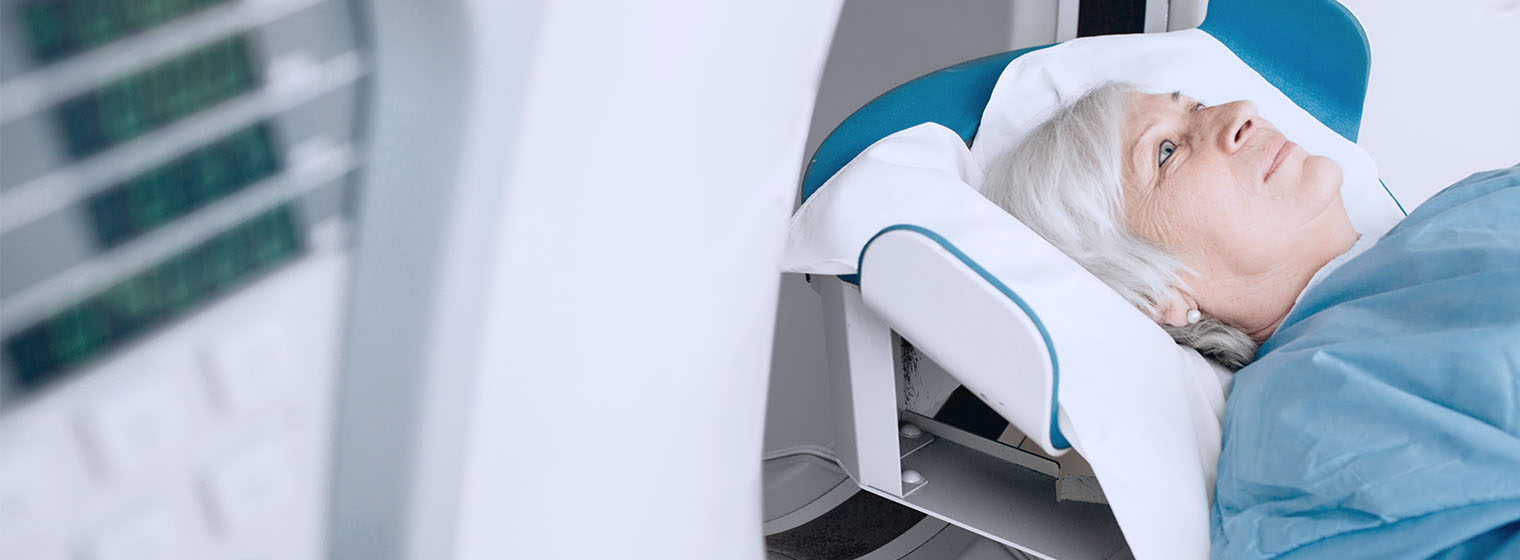
Methodist Medical Center provides comprehensive imaging and laboratory services for the communities of East Tennessee that we’re honored to serve.
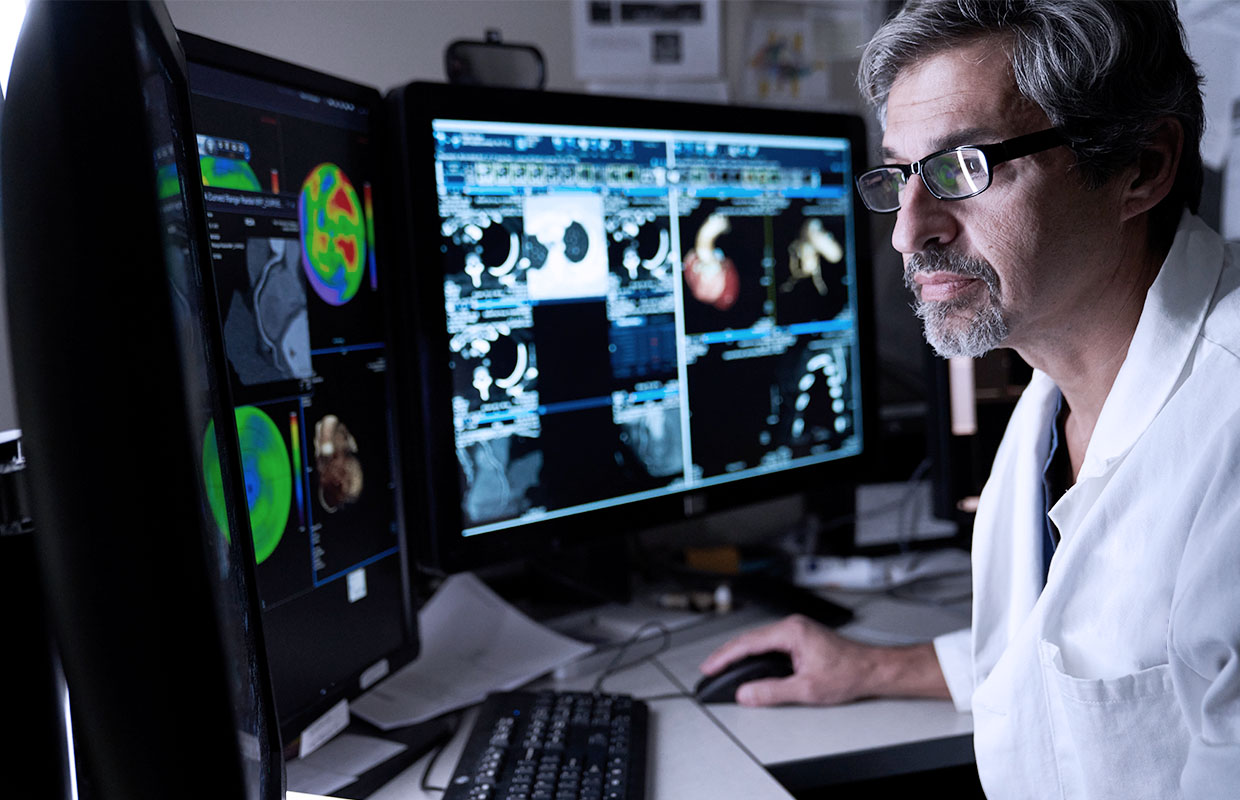
Our board-certified radiologists work with registered technologists who specialize in CT, MRI, nuclear medicine, special procedures (interventional radiology), x-ray, and ultrasound procedures.
Methodist also provides CT, MRI, and x-ray services at our Cheyenne Outpatient Diagnostic Center.
Imaging and Laboratory Services
Methodist Medical Center of Oak Ridge is proud to offer our community easy access to high-quality laboratory and imaging services. Imaging and lab services include:

Bone Density (DEXA)
This bone density test is used to measure bone mineral content and density. This measurement tells whether there is decreased bone mass. This is a condition in which bones are more brittle and prone to break or fracture easily.
This test is commonly used for:
- Axial skeleton
- Appendicular skeleton
- Vertebral fracture assessment (VFA)
CT Scan (including lung cancer screening CT)
Computed Axial Tomography is also known as a CT or CAT scan. It is an imaging test that uses x-rays and computerized imagery to make detailed images of the body, including bones, muscles, fat, and organs.
Methodist Medical Center of Oak Ridge also offers lung cancer screening CTs.
Lung cancer is the leading cause of cancer deaths in both men and women worldwide, and accounts for more U.S. cancer deaths than those from breast cancer, colon cancer, and prostate cancer combined.
Now, those at high risk have a new weapon in the fight against lung cancer. It’s called Low Dose CT screening and, because of early detection, studies have shown it can lower the risk of death from lung cancer by 20% in people who are at high risk.
LDCT lung screening is one of the easiest screening exams you can have. Our lung cancer screening procedure at Methodist Medical Center—
- Takes less than 10 seconds.
- Requires no medication or needles
- You can eat before and after the exam
- You do not even need to get changed, as long as the clothing on your chest does not contain metal
And now, you can breathe even easier, knowing Medicare covers the cost of your Low Dose CT lung cancer screening exam at Methodist Medical Center of Oak Ridge.
All of our Methodist Medical Center’s CT technologists are registered with the American Registry of Radiologic Technologists® (ARRT), with an advanced registry in Computed Tomography.
Learn more about our CT scan capabilities at Methodist Medical Center.
MRI
Magnetic Resonance Imaging (MRI) is a non-invasive procedure that uses powerful magnets and radio waves to create detailed images of the body.
MRI is often used to diagnose many types of sports injuries as well as provide clear pictures of the brain, abdomen, cervical, thoracic, and lumbar spines.
Unlike conventional Radiography and CT, no radiation is used.
Methodist Medical Center of Oak Ridge has a 3T MRI magnet in the hospital, and also a 1.5T MRI magnet at our Cheyenne Outpatient Center. The table weight limits are 350 pounds.
All MRI technologists at Methodist Medical Center are American Registry of Radiologic Technologists® with advanced registry in MRI.
Learn more about our MRI capabilities at Methodist Medical Center.
Nuclear Medicine
Our Methodist Medical Center Nuclear Medicine Technologists use radioactive material to access the function of organs or systems within the body.
Nuclear Medicine uses small quantities of radioactive materials, called isotopes, which are targeted to specific organ systems or tissues within the body. These can be introduced into the body in different ways.
Depending on the type of nuclear medicine exam you are undergoing, the radiotracer is either injected into a vein, but can also be swallowed, or inhaled as a gas, which eventually accumulates in the organ or area of your body being examined. A small amount of radiation is then detected with the use of a nuclear medicine gamma camera.
This safe and painless technique often spots abnormalities early in a disease’s progression. It also provides a way to gather information that otherwise would be unavailable or require surgery or more expensive diagnostic tests.
All Nuclear Medicine technologists at Methodist Medical Center are American Registry of Radiologic Technologists® (ARRT) and/or Certified Nuclear Medicine Technologist (CNMT) registered.
Learn more about our Nuclear Medicine services at Methodist Medical Center.
Special Procedures (Interventional Radiology)
Special procedures (interventional radiology) is a subspecialty of radiology, where minimally invasive procedures are performed using image guidance.
The concept behind IR is to diagnose or treat pathology with the most minimally invasive techniques possible. IR procedures can reduce infection rates, recovery times, and shorten hospital stays.
As a result, many IR procedures are performed with conscious sedation. General anesthesia is not usually necessary. Most IR procedures are performed on an outpatient basis, and some may require a very short hospital stay.
All IR Technologists at Methodist Medical Center are registered with the American Registry of Radiologic Technologists® and are registered in Vascular Interventional Radiography, and nurses are Advanced Cardiovascular Life Support certified.
Learn more about our special procedures (interventional radiology) at Methodist Medical Center.
Ultrasound
Ultrasound imaging, also called sonography, uses high-frequency sound waves to obtain images of internal organs as they function and can also assess blood flow.
The benefits of ultrasound include more comprehensive and reliable exam data, faster tests, and improved patient comfort. Ultrasound exams do not use radiation.
The ultrasound for heart patients can also be used to perform stress echo tests. Doctors rely on these tests to detect decreases in the supply of blood and oxygen to the heart, as well as irregular heartbeats.
Learn more about ultrasound services at Methodist Medical Center.
X-Ray
X-rays are a type of radiation called electromagnetic waves. X-ray imaging creates pictures of the inside of your body.
In the hospital-setting, x-rays are emitted by a machine as individual particles that pass through the body and then get detected. Radiation protection and minimizing patient exposure to be As Low As Reasonably Achievable (ALARA) is practiced at Methodist Medical Center to ensure patient safety.
Both Methodist Medical Center and our Cheyenne Outpatient Center have digital x-ray equipment, which means an image is immediately available for viewing by technologists. This technology eliminates the time needed to process x-rays, which means faster exams and less waiting for the patient.
Fluoroscopy is a technique for obtaining real-time x-ray images of a patient. A dye that shows up on x-rays can be injected or swallowed, which allows the radiologist to see blood vessels or organs as the contrast moves through the body. This process allows the physician to see images from inside the body real time on a TV monitor.
Fluoroscopy is often used to see the digestive tract. It can also help doctors locate a foreign object in the body, position a catheter or needle for a procedure, or set a broken bone.
All Radiologic Technologists at Methodist Medical Center are American Registry of Radiologic Technologists® registered.
Learn more about x-ray services at Methodist Medical Center.
Mammography
Mammography is the best screening tool for evaluating breast health and early detection of breast cancer. The Oak Ridge Breast Center is a Designated Comprehensive Breast Imaging Center from the American College of Radiology. It offers a complete range of breast health services, bone density screenings and the latest technology.
Learn more about our Breast Center.
Electrocardiogram (EKG)
An electrocardiogram (EKG) is one of the simplest and fastest tests used to evaluate the heart.
An EKG records these impulses to show how fast the heart is beating, the rhythm of the heart beats (steady or irregular), and the strength and timing of the electrical impulses as they move through the different parts of the heart.
If there’s poor blood flow, an EKG may show abnormalities, especially during exercise. These often don’t appear on an EKG taken during rest.
An exercise EKG – a stress or treadmill test – is often better at signaling coronary artery disease. Exercise EKGs show how the heart responds to physical activity.
Picture Archival & Communication System (PACS)
This technology allows images to be electronically captured, stored, and transmitted – all without film.
PACS makes high-quality MRI, CT, X-ray and ultrasound pictures immediately available by computer. Doctors can readily view any images a patient has had taken at Methodist Medical Center, as well as other locations in the Covenant Health system.
Patients no longer need to carry x-rays from place to place. In addition, PACS gives such clear images that doctors believe it results in better, more accurate diagnosis.
Outpatient Laboratory Services
Lab tests collected at the Cheyenne Outpatient Diagnostic Center are performed in the Methodist Medical Center hospital’s laboratory. STAT tests are transported to the laboratory immediately. Tolerance tests for Glucose, Lactose, and D-Xylose are performed in Same Day Surgery and must be scheduled.
The Cheyenne Outpatient Diagnostic Center in Oak Ridge is our partner in providing top-quality diagnostic care services to the people of Eastern Tennessee. This facility includes—
- A dedicated imaging team
- State of the art technology
- Board-certified Radiologists
- Registered Technologists
- Fast, efficient and courteous service
- Free, convenient parking
The Cheyenne Outpatient Diagnostic Center’s hours of operation are—
Lab and EKG – 7 a.m.-5 p.m., Monday-Friday
Diagnostic X-ray – 9 a.m.-5:00 p.m., Monday-Friday
CT Scans – 7:30 a.m.-3:30 p.m., Monday-Friday by appointment
MRI – 7 a.m.-3 p.m., Monday and Wednesday; 7 a.m. – 5 p.m., Tuesday, Thursday and Friday