Patricia Neal Outpatient Center
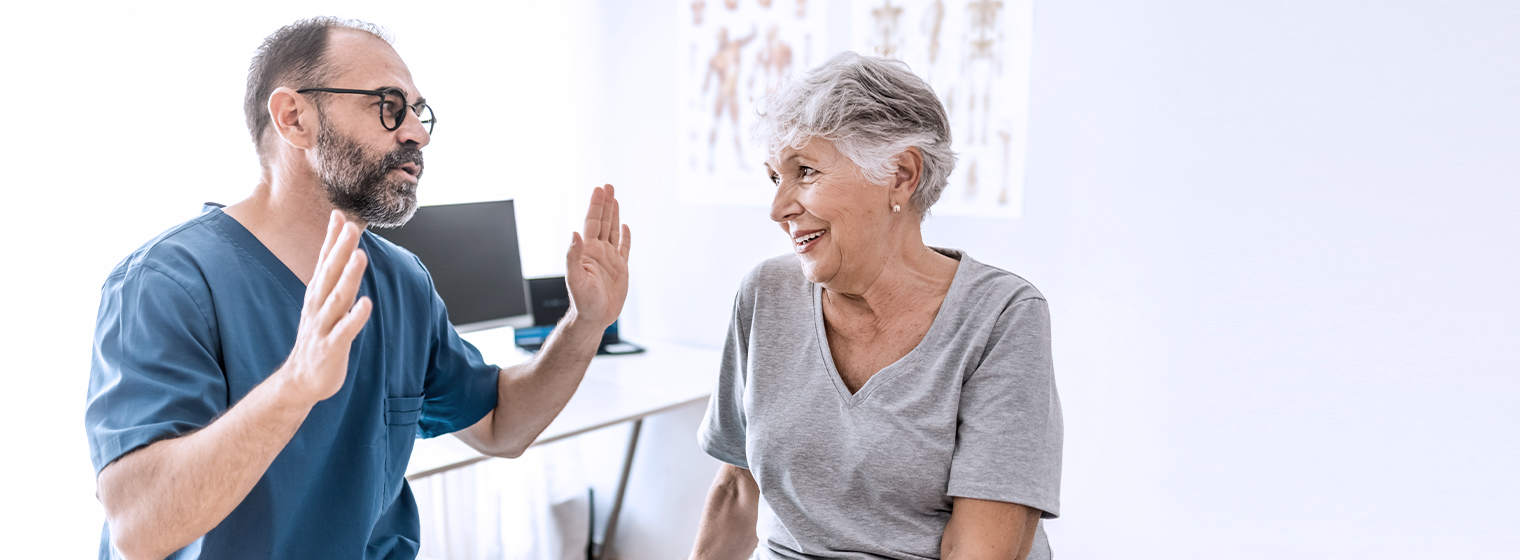
Welcome to Patricia Neal Outpatient Center
Outpatient rehabilitation after injury or illness to help patients achieve their best quality of life
Outpatient Rehabilitation Services to Improve Function and Quality of Life
Patricia Neal Outpatient Center in Knoxville, Tennessee, is a dynamic part of the rehabilitation spectrum of care. Our facility has a longstanding history of primarily treating individuals with neurological injuries, diseases and related diagnoses since the early 1980s. We offer outpatient rehabilitation for patients transitioning from inpatient rehabilitation programs, as well as for those who are referred by general or specialized healthcare providers. Services are available for a short course of treatment after an injury, or for a lifetime of care as abilities change with the aging process.
Located at Fort Sanders Regional Medical Center, the Patricia Neal Outpatient Center offers excellent physical, occupational, speech/language and behavioral medicine therapies. Our dedicated therapy team has provided therapy services to our community over the past four decades with more than 550 years of combined specialized clinical experience. Using a team approach, our therapists work with patients and their families to improve function and capabilities based on each patient’s individual goals.
Patricia Neal Outpatient Center provides outpatient rehabilitation services for adults and adolescents with these diagnoses:
- Stroke
- Brain injury
- Spinal cord injury
- Amputation
- Parkinson’s Disease
- Multiple Sclerosis
- Multiple trauma
- Other neurological impairments
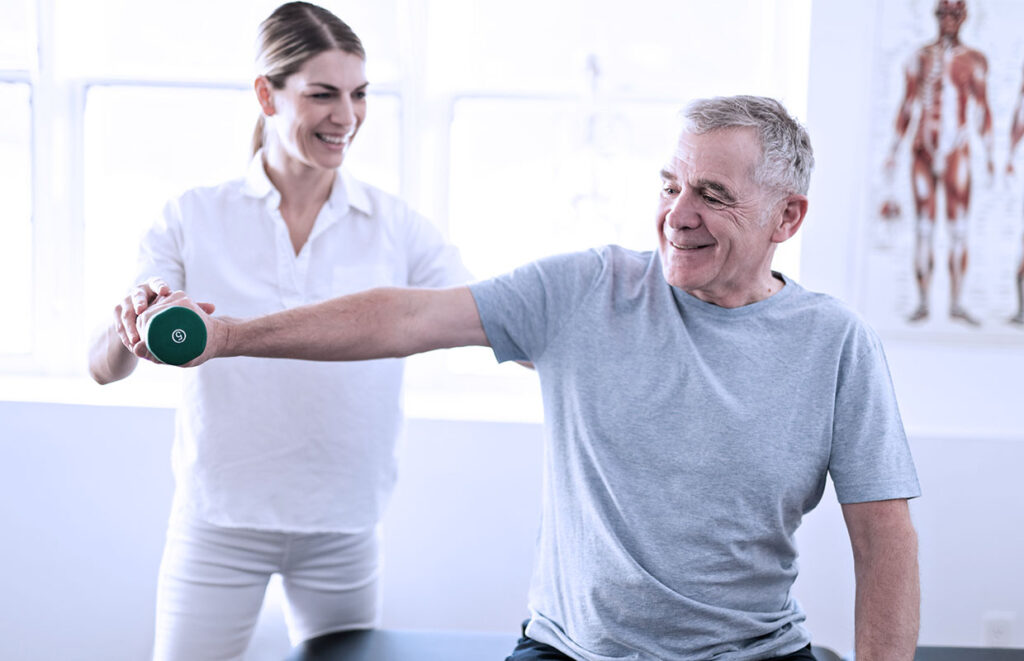
Specialized Programs at Patricia Neal Outpatient Center
Assistive Technology and Augmentative Communication
Augmentative/Alternative Communication is for patients who have been diagnosed with a neurological condition and have difficulty communicating verbally. This specialized outpatient rehabilitation uses technology to support, enhance and supplement communication for individuals who are not independent verbal communicators in all situations.
Common Diagnoses:
- Progressive neurological diseases (ALS, Parkinson’s and other neuromuscular conditions)
- Late effects of CVA (Stroke)
- Late effects of traumatic brain injury
Program Features/Requirements:
- By physician order only (Must have a prescription for: Augmentative/Alternative Communication evaluation with SLP and Assistive Technology evaluation with OT)
- Must have family support and/or caregiver support
- Initial evaluations are approximately 1.5 hours and scheduled by appointment. Referrals can be faxed to 865-331-2024
- Evaluation is performed by a speech-language pathologist with assistance from an occupational therapist as needed; durable medical equipment vendor(s) is/are also present for evaluation
Meet the Therapists
Mary Margaret Preston, MA, CCC-SLP
Clinical Specialist
865-331-2316
[email protected]
Sarah Gimbel, OTR/L
865-331-1541
[email protected]
Contact Us
To learn more about Assistive Technology and Augmentative Communication, please call 865-331-2819.
Assistive Technology and Augmentative Communication Program Information
Balance and Vestibular Rehabilitation
Difficulties with balance can result from a combination of aging and medical issues or be caused by inner ear (vestibular) problems. Functional problems may include difficulty walking safely at a normal pace, going up and down stairs, performing activities of daily living, or experiencing dizziness when working, performing household tasks or shopping.
Common Causes of Multifactorial Balance Problems:
- Orthopedic conditions or injuries
- Visual problems
- Physical inactivity
- Muscle weakness or muscle tightness
- Stroke or peripheral neuropathy
- Positional vertigo
- Complications of the inner ear
Program Features/Requirements:
- Participation in the program is by physician order only (Must specify: physical therapy for balance/vestibular rehabilitation)
- Program includes comprehensive analysis of balance factors, which may include computer-assisted diagnostic and therapeutic equipment such as virtual reality (VR) systems
- Our outpatient rehabilitation team designs a regimen of therapy and home exercise to strengthen weakened extremities, promote central nervous system compensation and reduce fall risk
Contact Us
To learn more about Balance and Vestibular Rehabilitation, please call 865-331-2819.
Behavioral Medicine and Rehabilitation Psychology Services
Our clinical psychology and clinical neuropsychology specialists provide highly skilled care to medical and other outpatient populations. A physician’s order is required specifying either neuropsychological evaluation or psychological therapy for a specified condition (e.g., Post-traumatic stress disorder, depression, insomnia, anger outbursts, post-concussive syndrome.)
Behavioral Medicine Services:
- Treatment for depression
- Treatment for anxiety
- Cognitive behavior therapy (CBT)
- Post-concussive syndrome (PCS) program
- Comprehensive therapy program for PTSD
- Cognitive behavior therapy for insomnia (CBT-I)
- Comprehensive stress management for chronic pain
- Interpersonal and communication skills training
- Psychotherapy for general conditions (e.g., adjustment disorder, family conflict, social anxiety)
Psychological Therapy in the Medical Setting
We provide emotional support and practical strategies for patients and their families as they adjust to living with disability from illness or injury. For example, we can help with chronic pain, substance use disorder, anxiety, depression or sleep disorder. With the patient’s permission, we include family in therapy sessions to discuss how to assist with lifestyle adjustments, improve communication and set important mutual goals.
Neuropsychological Evaluation
Neuropsychological evaluations provide detailed information regarding an individual’s attention, memory, language, visual processing, executive abilities and emotional status. Patients are referred by their physician for a neuropsychological evaluation to clarify areas of strength and difficulty following an injury to the brain and to provide diagnostic information as the individual navigates recovery and finding a satisfactory new normal.
Meet the Clinicians
April Crusco, Ph.D, psychologist
April Crusco, Ph.D., received her Bachelor of Arts degree in psychology from the University of Maryland’s Division of Behavioral and Social Sciences. She went on to complete master’s and doctoral degrees at the University of Mississippi, studying human communication and cognitive behavioral therapy. In her role as a clinical psychologist at Patricia Neal Outpatient Center, she is involved in many aspects of a patient’s rehab program. Dr. Crusco has continued to volunteer in the local Knoxville community as well, serving on the Board of the Knoxville Area Psychological Association (a division of the American Psychological Association), first as continuing education Coordinator, and later as president of KAPA.
Michael Klitzke, Ph.D., neuropsychologist
Dr. Klitzke works with the patients and their families to help with adjustment issues and provide treatment for depression, anxiety and sleep disturbances. Dr. Klitzke provides neuropsychological evaluations for rehabilitation patients as well as patients referred from physicians in our region. His training and educational background includes degrees from the University of Minnesota, University of Mississippi, an internship at the Medical College of Georgia and post-doctoral fellowship at the University of Rochester School of Medicine. He has published in scientific journals in the areas of neuropsychology, addiction and therapist training.
Contact Us
To learn more about Behavioral Medicine and Rehabilitation Psychology Services, please call 865-331-1958.
Comprehensive Driving Program
This specialized outpatient rehabilitation program assesses a patient’s physical, visual/perceptual and cognitive abilities that are needed for safe driving following an illness or injury.
Illness or injuries that can cause driving impairment:
- Stroke
- Traumatic brain injury
- Spinal cord injury
- Amputations
- Orthopedic injuries
- Dementia / Alzheimer’s Disease
- Parkinson’s Disease
- Other chronic health issues
Evaluation:
- The driving evaluation may require two or more appointments
- The first appointment is for an in-clinic evaluation. Additional appointments, when appropriate, are for an on-road assessment and training (if needed)
- The clinical evaluation is performed by an occupational therapist and the on-road evaluation is by a certified driver rehabilitation specialist; Recommendations are made after all assessments are completed
Education and Training:
- Recommended to assist patients dealing with medical issues to become independent drivers
- Training is directed toward correcting bad habits, vehicle consultation for client’s use or learning to use adaptive equipment for driving (if needed)
Participation:
- A medical provider’s referral for OT (occupational therapy) evaluation/driver’s training is required
- The patient must be seizure-free or free of lapses of consciousness due to epilepsy, cardiac syncope, diabetes or other conditions for a minimum of six months based on requirements of licensing by the State of Tennessee Department of Safety or if the patient has a driver’s license issued outside of Tennessee, the requirements of the Department of Motor Vehicles in the state where the patient is licensed
- The program is not covered by insurance
- Cost estimations can be provided but not guaranteed, as the cost will vary based on each patient’s needs
Contact Us
For more information about the Comprehensive Driving Program, please call 865-331-2819.
Innovative Recreation Cooperative
The goal of the Patricia Neal Innovative Recreation Cooperative (IRC) is to remove barriers that prevent an individual from developing the ability to enjoy self-directed leisure for a healthier lifestyle. The program reflects its name in its philosophy:
-
- Innovation refers to new and creative ways for individuals with a disability to participate in activities they enjoy.
-
- Recreation is the medium that is used to enhance participants’ education and awareness of leisure opportunities and activities.
-
- Cooperative is the group of individuals who support, nurture and mentor participants, using their expertise and talents to make the clinic a success.
Each IRC clinic is an innovative form of recreation using a cooperative approach of different talents. We believe:
-
- Play is an instrumental and fundamental need of all people. Everyone works to be able to play. Play behaviors are what structure work behaviors.
-
- The tangential effects of recreation promote and provide health and wellness. Leisure has no barriers.
-
- It is the right of all individuals to participate in leisure. What each person makes of the experience reflects each person’s individuality.
IRC Winter 2025 Events Schedule
IRC Summer 2025 Events
Contact Us
To learn more about the IRC, please call 865-331-1353.
Limb Loss Treatment Program
Amputation rehabilitation addresses many different aspects including:
- Prevention of Contractures: A contracture is the development of soft-tissue tightness that limits joint movement. Your therapist will teach you how to stretch and position your limb to maintain a normal range of motion and prevent contractures
- Compression to reduce swelling: Your physical therapist will help you maintain compression on your residual limb to protect it, reduce and control swelling, shape it, and help it heal. Compression can be accomplished by:
- Wrapping the limb with elastic bandages
- Wearing an elastic shrinker sock
- Pain Management: Your physical therapist will help with pain management in a variety of ways, including:
- Manual therapy, which may include “hands-on” treatment performed by your physical therapist, including soft tissue (i.e., muscle, tendon) mobilization, joint manipulation, or gentle range-of-motion exercises, to improve circulation and joint motion
- Stump management, including skin care and stump sock use
- Desensitization to help modify how sensitive an area is to clothing, pressure or touch
Approximately 80% of people who undergo amputations experience a phenomenon called phantom limb pain, a condition in which some of their pain feels like it’s coming from the amputated limb. Your physical therapist will work with you to lessen and eliminate this sensation.
- Prosthetic Fitting and Training: Your physical therapist will work with a prosthetist to prescribe the best prosthesis for your life situation and activity goals. The prosthesis will be modified to fit as needed over this time
- Functional Training: Your therapist will teach you skills necessary for successful use of your new prosthetic limb with activities of daily living, walking, transfers, etc. You will learn how to care for your residual limb with limb checks and hygiene and continue contracture prevention with exercise and positioning. You will be taught how to put your new prosthesis on and take it off, and how to manage a good fit with the socket type you receive. Your therapist will help you gradually build up a tolerance for wearing your prosthesis at increasingly longer times while protecting the skin integrity of your residual limb
Amputee Support Group of Knoxville (ASK)
This support group allows individuals struggling after an amputation to come together and support each other with a combination of social and educational activities. ASK meetings are held the second Thursday of each month, at 6 p.m. at Fort Sanders Regional, with a few occurring off-site.
Contact Us
To learn more about the Limb Loss Treatment Program, please call 865-331-1605.
Post-Concussion Program
A concussion is a traumatic brain injury that is caused by a sudden blow or impact to the head. Symptoms of a concussion may be brief or may linger for months, or longer. Go to the emergency room or call a healthcare provider right away if a person loses consciousness after a blow to the head.
Symptoms of a possible concussion include:
- Headache
- Vomiting or nausea
- Trouble thinking normally
- Memory problems
- Trouble walking
- Dizziness
- Vision problems
- Fatigue
- Mood changes
- Changes in sleep patterns
Research has shown early intervention following a concussion can significantly reduce the long-term impacts and allow the patient to return to work, school, recreation and sports safely. Outpatient rehabilitation therapists at PNOC provide comprehensive treatment to patients following a concussion. Patients are treated by a multidisciplinary team of rehabilitation specialists in speech pathology, physical therapy, occupational therapy and clinical psychology using the behavioral medical model.
A physician’s order is required. Once the order is received, the appropriate clinicians evaluate the patient to identify cognitive, language, balance, vision and psychological conditions. A personalized treatment plan is then developed for each patient.
Contact Us
For more information about the Post-Concussion Program, please call 865-331-2819.
Seating and Mobility Clinic
The Seating and Mobility Clinic serves pediatric and adult patients with a variety of neurological and other diagnoses that cause physical limitations affecting function, posture, positioning, skin integrity and mobility.
Seating and mobility evaluations include an assessment of posture, strength, range of motion, skin and mobility related to the use of wheelchairs and other medical equipment. This information is used in the assessment of appropriate positioning and mobility devices.
Evaluation for custom durable medical equipment includes:
- Manual and power wheelchairs
- Cushions
- Backs
- Bathroom equipment
- Other related mobility equipment
- Custom molding for seating
Pressure Mapping
Pressure mapping measures “interface pressures” with different cushions, back rests or mattresses. This tool is especially valuable for patients with skin breakdown.
Equipment selection based on:
- Patient and family goals
- Evaluation of function, muscle tone, range of motion, skin breakdown risk and positioning
- Accessibility of home, school and community
- Transportation
- Funding of equipment
Professional staff involved:
- Experienced physical therapists with RESNA certification and/or training in assistive technology
- Assistive technology professionals from local rehab technology suppliers
- Consulting occupational therapist or speech language pathologist as needed
Contact Us
For more information about the Seating and Mobility Clinic, please call 865-331-1958.
Support Groups
Knoxville Brain Injury Support Group
Meets: First Monday of the month at 6 p.m. in the 5-East classroom. For information, call 865-331-1499.
Stroke Support Group
Meets: Third Tuesday of each month from 12:30 to 2 p.m. in the 4-West Paul Newman A/V room. For information, call 865-331-1353.
Limb Loss Support Group
Meets: Second Thursday of each month at 6 p.m. For more information, call 865-331-4912.
All support groups meet at Fort Sanders Regional Medical Center, 1901 Clinch Ave., Knoxville, Tennessee.
Patient Tools
Get started with some of our online patient tools.
About Patricia Neal Outpatient Center
Patricia Neal Outpatient Center is part of the comprehensive Patricia Neal Rehabilitation Services offered by Covenant Health and Fort Sanders Regional Medical Center. Named for Oscar-winning actress Patricia Neal, a Knoxville native who resumed a successful acting career after suffering three devastating strokes, the Center provides outpatient rehabilitation services for adults and adolescents who have experienced an injury or medical condition that has affected their functional abilities and quality of life.
Our therapists use a team approach, combining their expertise and working with patients and their families to achieve each patient’s specific goals.
Schedule an Appointment
Our team is ready to provide you with comprehensive, specialized outpatient rehabilitation services when you need us. Please note, a referral is required for some of our services.