Imaging Services at Covenant Health Morristown-Hamblen
When it comes to your diagnostic health care, you have a choice. Choose Covenant Health Morristown-Hamblen for your imaging services!
Morristown-Hamblen offers a comprehensive range of imaging services and state-of-the-art technology. Our technical staff and board-certified radiologists are devoted to meeting the community’s needs and delivering excellent patient care.
We are proud to be an accredited American College of Radiology (ACR) facility. The ACR gold accreditation seal represents the highest image quality and patient safety level. After a peer-review evaluation by board-certified physicians and medical physicists, it is only awarded to facilities meeting ACR practice guidelines and technical standards.
Mammogram Self-Scheduling
Morristown-Hamblen is pleased to announce that you can now self-schedule your screening mammogram at the Covenant Health Morristown-Hamblen West Diagnostic Center
The American College of Radiology recommends annual screening mammograms beginning at age 40, and earlier for those at higher risk of breast cancer. Mammograms help detect cancer earlier and save lives.
How to Schedule Your Mammogram:
- Click the link below.
- When prompted, type “Mammogram” or “Mammography” into the search bar.
- Choose the location and appointment availability that works best for you!
Please note: At least 365 days must have passed since your last screening mammogram.
We look forward to seeing you!

CT Scan
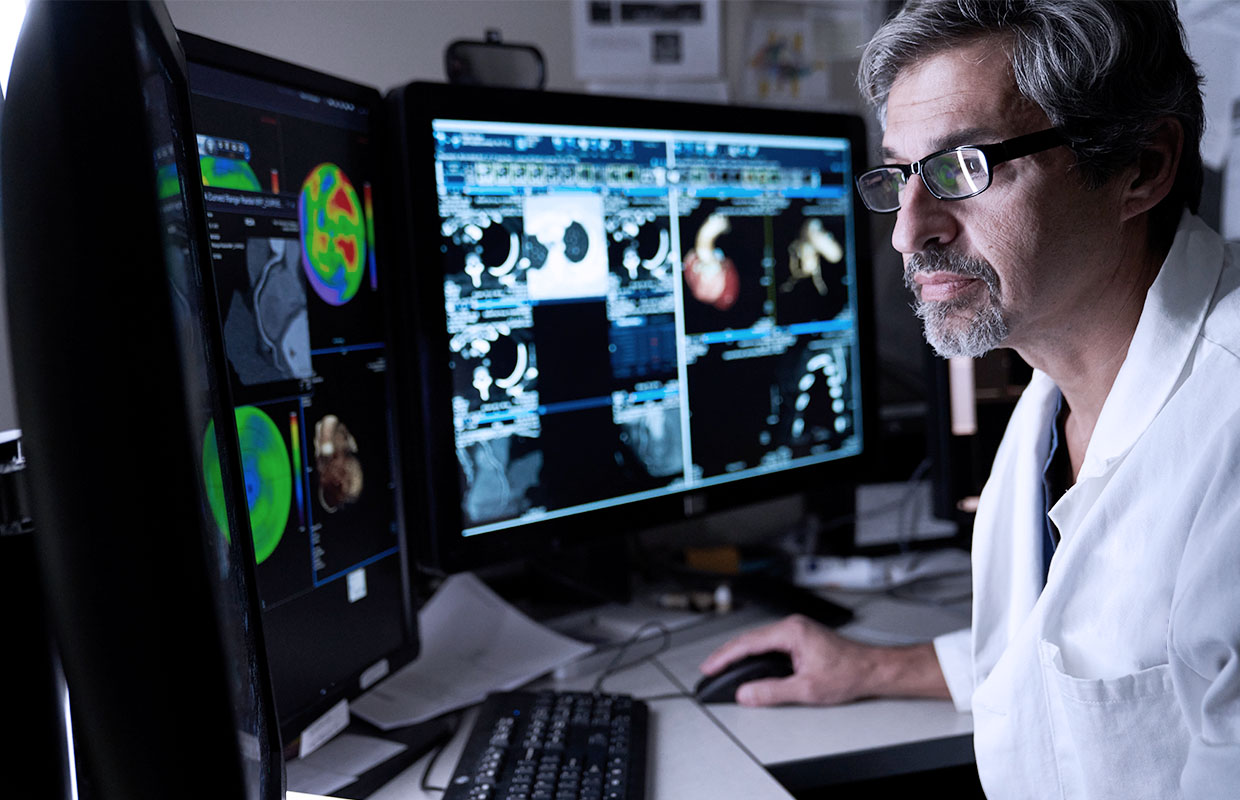
Computed Axial Tomography is also known as a CT or CAT scan. It is an imaging test that uses x-rays and computerized imagery to make detailed images of the body, including bones, muscles, fat, and organs.
All of Morristown’s CT Technologists are registered with the American Registry of Radiologic Technologists® (ARRT), with an advanced registry in Computed Tomography.
CT services include:
- Routine head, neck, chest, abdomen and pelvis studies
- Orthopedic studies – spines and extremities
- Pediatric studies
- CT Angiography – all arterial studies (circle of Willis, carotid, renal, mesenteric, aorta and run-offs)
- Coronary artery studies
- Biopsies and drainages
Lung Cancer Screening
Lung cancer is the leading cause of cancer deaths in both men and women worldwide, and accounts for more U.S. cancer deaths than those from breast cancer, colon cancer, and prostate cancer combined.
Now those at high risk have a new weapon in the fight against lung cancer. It’s called Low Dose CT screening and because of early detection, studies have shown it can lower the risk of death from lung cancer by 20% in people who are at high risk.
LDCT lung screening is one of the easiest screening exams you can have.
- The exam takes less than 10 seconds.
- No medications are given, and no needles are used.
- You can eat before and after the exam.
- You do not even need to get changed as long as the clothing on your chest does not contain metal.
CT Exam Preparation:
- Each patient will need to bring with them a complete written list of medications they are currently taking.
- Arrive 15 minutes prior to your scheduled appointment to register.
- Inform technologist or RN if there is a possibility you are pregnant.
- When the patient arrives to the CT department, they will be asked about their medical history by a nurse or technologist. If lab work is needed, it will be completed prior to the exam
MRI
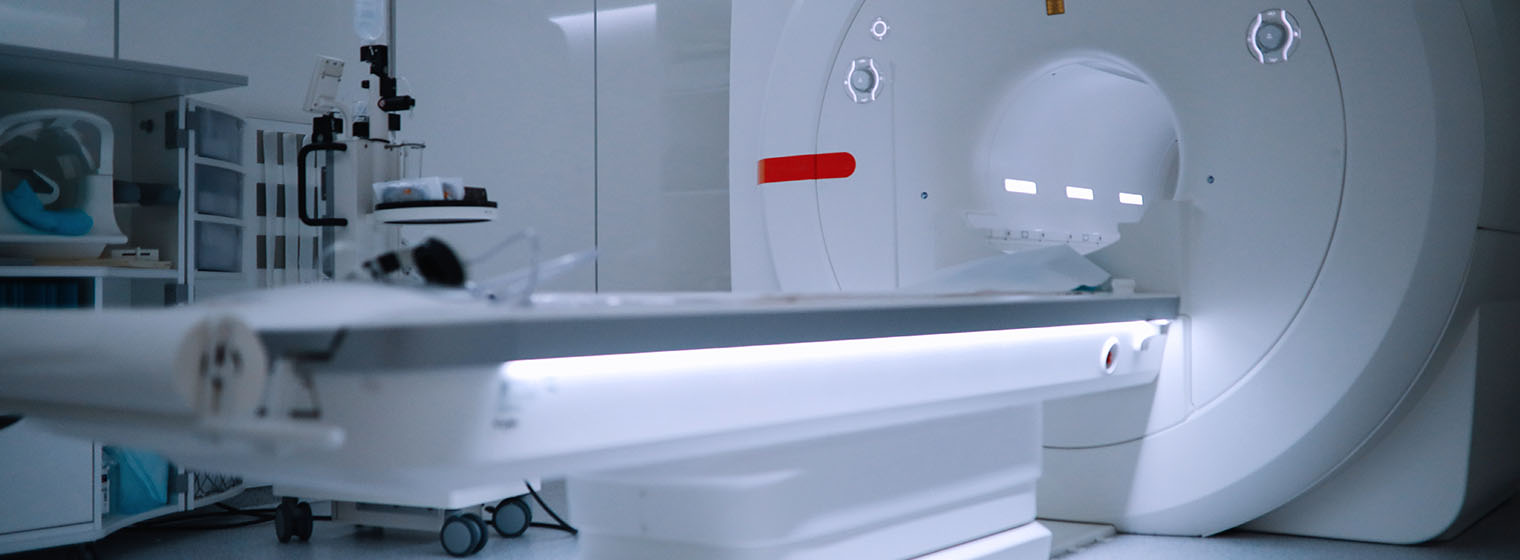
Magnetic resonance imaging (MRI) is a non-invasive procedure that uses powerful magnets and radio waves to create detailed images of the body. MRI is often used to diagnose many types of sports injuries as well as provide clear pictures of the brain, abdomen, cervical, thoracic, and lumbar spines. Unlike conventional Radiography and CT, no radiation is used. Morristown Hamblen Healthcare System as a 1.5T MRI magnet in the hospital with a weight limit of 350 pounds. We offer a 1.5T MRI magnet at Morristown Regional Diagnostic Center with a weight limit of 550 pounds.
All MRI technologists at Covenant Health Morristown-Hamblen are American Registry of Radiologic Technologists® with advanced registry in MRI.
Our MRI services include:
- Neuro – Brain and Spine
- Orthopedics
- Vascular
- Abdomen (liver, spleen, pancreas, kidney)
If you are claustrophobic, please discuss with your physician.
Nuclear Medicine
Nuclear Medicine specialists use radioactive material to access the function of organs or systems within the body. Nuclear Medicine uses small quantities of radioactive materials, called an isotope, targeted to specific organ systems or tissues within the body. These can be introduced into the body in different ways.
Depending on the type of nuclear medicine exam, the radiotracer is either injected into a vein, swallowed or inhaled as a gas. A small amount of radiation is then detected using a nuclear medicine gamma camera. This safe and painless technique often spots abnormalities early in a disease’s progression. It also provides a way to gather the information that otherwise would be unavailable, require surgery or more expensive diagnostic tests.
All Nuclear Medicine technologists at Covenant Health Morristown-Hamblen are registered by the American Registry of Radiologic Technologists® (ARRT) and/or Certified Nuclear Medicine Technologist (CNMT).
Nuclear medicine is used to:
- Analyze kidney function
- Determine the presence or spread of cancer
- Evaluate bones for fractures, infection, arthritis or tumors
- Identify bleeding in the bowel
- Identify gallbladder blockages
- Locate infections
- Measure thyroid for overactive or underactive functioning.
- Provide images of blood flow and heart functioning
- Scan lungs for respiratory and blood-flow problems
Exam preparation:
- Each patient will need to bring with them a complete written list of medications they are currently taking.
- Arrive 15 minutes prior to your scheduled appointment to register.
- Patient will be called the day before appointment. Technologist will inform patient of any preparation needed, estimated exam duration, and will address any questions the patient may have.
- Inform technologist or RN if there is a possibility you are pregnant.
- When the patient arrives to the Nuclear Medicine department, they will be asked about their medical history by a nurse or technologist. If lab work is needed, it will be completed prior to the exam.
Ultrasound
Ultrasound imaging, also called sonography, uses high-frequency sound waves to obtain images of the inside of the body. Benefits of ultrasound include more comprehensive and reliable exam data, faster tests and improved patient comfort.
Ultrasound exams do not use radiation.
Our ultrasound services include:
- Gynecology
- Vascular
- Obstetrics
- Biopsies and Drainages
- Breast
- Other general ultrasound procedures
Exam preparation:
- Each patient will need to bring with them a complete written list of medications they are currently taking.
- Arrive 15 minutes prior to your scheduled appointment to register.
- Ultrasound Abdomen — The patient should have no food or drink for 8 hours prior to exam.
- Ultrasound Pelvis –Full bladder is required for this exam. Patient should drink 40 ounces of fluids prior to exam.
X-Ray
X-rays are a type of radiation called electromagnetic waves. X-ray imaging creates pictures of the inside of your body by emitting individual particles through the body that then get detected.
Radiation protection and minimization of patient exposure is always considered for patient safety.
Fluoroscopy
Fluoroscopy is a technique for obtaining “live” x-ray images of a patient. A dye that shows up on x-rays is injected or swallowed to outline blood vessels or organs as it moves through the body. This process allows the physician to see images inside the body on a TV monitor.
Fluoroscopy is often used to see the digestive tract. It also can help doctors locate a foreign object in the body, set a broken bone or position a catheter or needle for a procedure.
PET/CT
Positron Emission Tomography (PET/CT) combines the functional information of a PET scan with the anatomical information of a Computed Tomography (CT) scan. PET scans can detect changes in cellular function, such as; how your cells utilize nutrients like sugar and oxygen. However, CT scans capture cross-sectional images of the body.
Once the PET and CT are combined, the CT provides more anatomical details of the body to see where the metabolic changes occur. This safe and painless technique can provide information for your physician to make an early diagnosis.
PET/CT uses small quantities of radioactive materials, called an isotope, targeted to specific organ systems or tissues within the body. The isotope is introduced into the body by being injected into a vein.
Digital Mammography
Morristown Regional Diagnostic Center provides mammography screenings and breast ultrasounds to detect changes in breast tissue that are difficult to feel by hand. Our mammography unit is digital, using the latest mammogram technology to obtain clearer images for proper diagnosis.
The user-friendly design of the new equipment means greater comfort for women while receiving breast cancer screenings and diagnoses. The new technology cuts scan time in half, allowing patients to be seen more quickly, and it provides enhanced images for the physicians and technologists at Morristown Hamblen Healthcare System.
We also have an extra set of “eyes” on your images with the iCAD review software. This aids the board-certified radiologist by comparing your breast images to thousands of known abnormalities. You can feel confident that your exam is performed with the highest quality and best care.
Stereotactic Breast Biopsy
If cancer cells are detected, the physician may perform stereotactic biopsies. A stereotactic breast biopsy requires a specialized mammography machine that helps guide the radiologist’s instruments to the abnormal growth site.
Bone Density
Dual-energy X-ray absorptiometry (DEXA) is used for bone density testing to measure the density and strength of bones. This test helps determine if you have osteoporosis – a disease that causes bones to become more fragile and more likely to break.