
How Aquatic Therapy Advances Rehab at Covenant Health Roane
- 4 minute read.
- Last Updated: 6/24/2026
Orthopedic care is undergoing a profound transformation. This change is driven by advancements in technology, patient-centered treatment models and innovative rehabilitation techniques.
At Covenant Health Roane, these advancements include a robust aquatic therapy program. This program bridges the gap between early-stage recovery and full functional mobility. By blending science, engineering and healthcare, aquatic therapy represents a new frontier in orthopedic innovation.
The Evolution of Orthopedic Rehabilitation
Traditionally, orthopedic rehabilitation has relied heavily on land-based physical therapy. While effective, these methods can pose challenges for patients experiencing severe pain, limited mobility or post-surgical restrictions. This is particularly true for individuals recovering from procedures such as total joint replacements, ligament reconstructions or complex fractures.
The therapy services offered through Covenant Health Therapy on Roane’s campus provide a growing focus on adaptive therapies.
“These approaches meet patients where they are in their recovery journey,” says Matt Magee, director of ambulatory services with Covenant Health. “Aquatic therapy offers a low-impact, highly customizable rehabilitation environment.”
Modern Aquatic Therapy
Modern aquatic therapy pools are far more than basic rehabilitation tools. They are designed to maximize safety, accessibility and therapeutic outcomes. At its core, aquatic therapy uses the physical properties of water to create an optimal healing environment.
“Aquatic therapy can reduce up to 75% of a patient’s body weight,” adds Magee. “This dramatically lowers the stress placed on joints, muscles and connective tissue during exercise.”
Roane’s state-of-the-art aquatic therapy pool offers:
- A lift chair for safe patient transfer into the water
- A bench for seated exercise, enabling early-stage rehabilitation
- A six-foot well for deep water therapy and non-weight-bearing movement
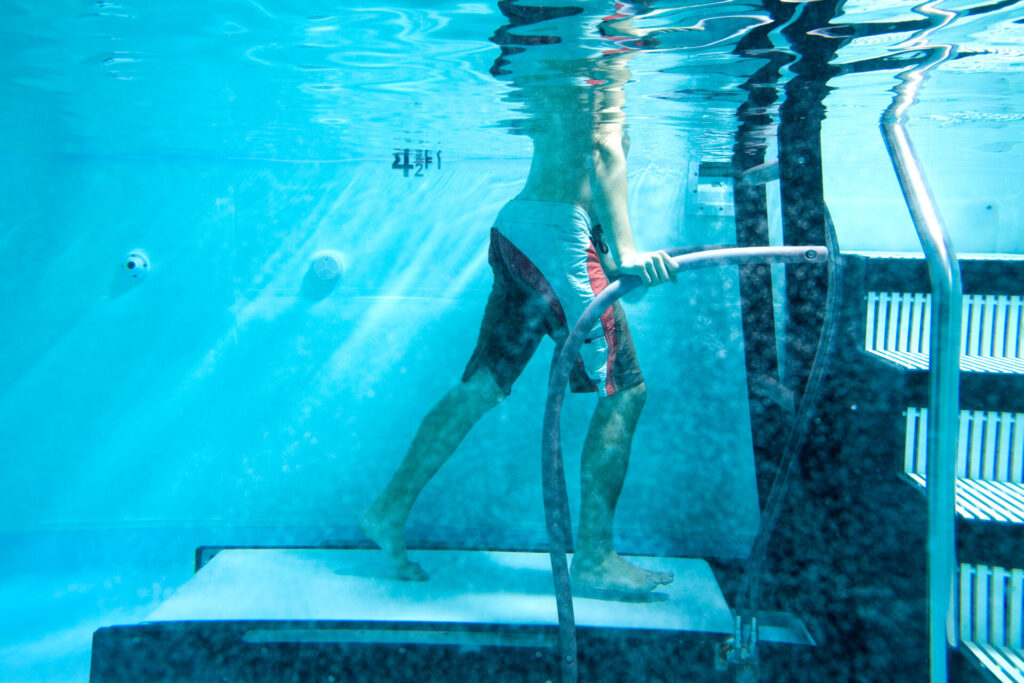
- An underwater treadmill, allowing patients to regain walking patterns with reduced stress on joints
Why Water Works
Water creates a gentle environment that minimizes the risk of re-injury. The warmth of therapeutic pools can help relax muscles, reduce stiffness and alleviate pain.
It also allows patients to perform movements that would otherwise be too painful or unsafe on land.
“By helping patients move sooner, we can prevent muscle atrophy, improve circulation and accelerate recovery timelines,” Magee explains.
Water provides consistent resistance in all directions. By starting therapy in an aquatic environment, patients can rebuild strength more evenly.
Patient-Centered Applications
Aquatic therapy is highly adaptable and benefits a wide range of orthopedic and neurological conditions. Clinicians often recommend aquatic therapy for the following conditions.
Orthopedic Conditions
- Musculoskeletal injuries such as joint pain, strains, sprains, dislocations and fractures
- Post-operative recovery from total hip or knee replacements
- Rehabilitation following ACL reconstruction or rotator cuff repair
- Chronic conditions like arthritis and osteoporosis
Functional and Mobility Challenges
- Muscular weakness or fatigue
- Difficulty walking
- Balance and coordination deficits
- Training in the use of assistive devices such as canes, crutches or walkers
Neurological and Complex Conditions
- Stroke recovery
- Traumatic brain injuries
- Parkinson’s disease
- Multiple sclerosis
- Other neurological disorders impacting mobility and coordination
Specialized Rehabilitation Needs
- Amputation rehabilitation
- Vestibular disorders
- Comprehensive patient and family education for long-term care strategies
This wide range of applications makes aquatic therapy both a primary and complementary treatment approach.
Enhancing the Patient Experience
Beyond the clinical benefits, aquatic therapy also improves the emotional and psychological aspects of recovery.
“Many patients who feel discouraged by pain or limited mobility on land find renewed hope in water-based therapy,” explains Magee. “The ability to move more freely, even temporarily, can boost morale and motivation, both of which are critical to long-term success.”
Your Partner in Care
Orthopedic innovation is not just about surgical advancements. It’s about reimagining recovery itself. Aquatic therapy embodies this shift by offering a safe, effective and patient-centered approach to rehabilitation.
Learn more about aquatic therapy services at Covenant Health Roane or find another aquatic therapy center near you. Discover how you may be able to self-refer for treatment.