
Pulmonology Services

Pulmonology Services at Fort Loudoun Medical Center
Your ability to breathe easily affects your energy, well-being, and quality of life. Each cell in your body needs oxygen, which we get from the air around us. Once oxygen is in your lungs, it moves into the bloodstream and goes throughout your body. In your cells, oxygen is exchanged for carbon dioxide. The bloodstream carries carbon dioxide back to the lungs, where it is exhaled. This vital process happens automatically when you breathe.
Lung diseases and conditions affect your ability to breathe. Fort Loudoun Medical Center offers a variety of pulmonology (lung-related) testing services to help diagnose lung conditions. Our expertise, combined with our advanced, top-of-the-line equipment, will help your medical providers assess the health of your lungs.

Pulmonary Function Testing
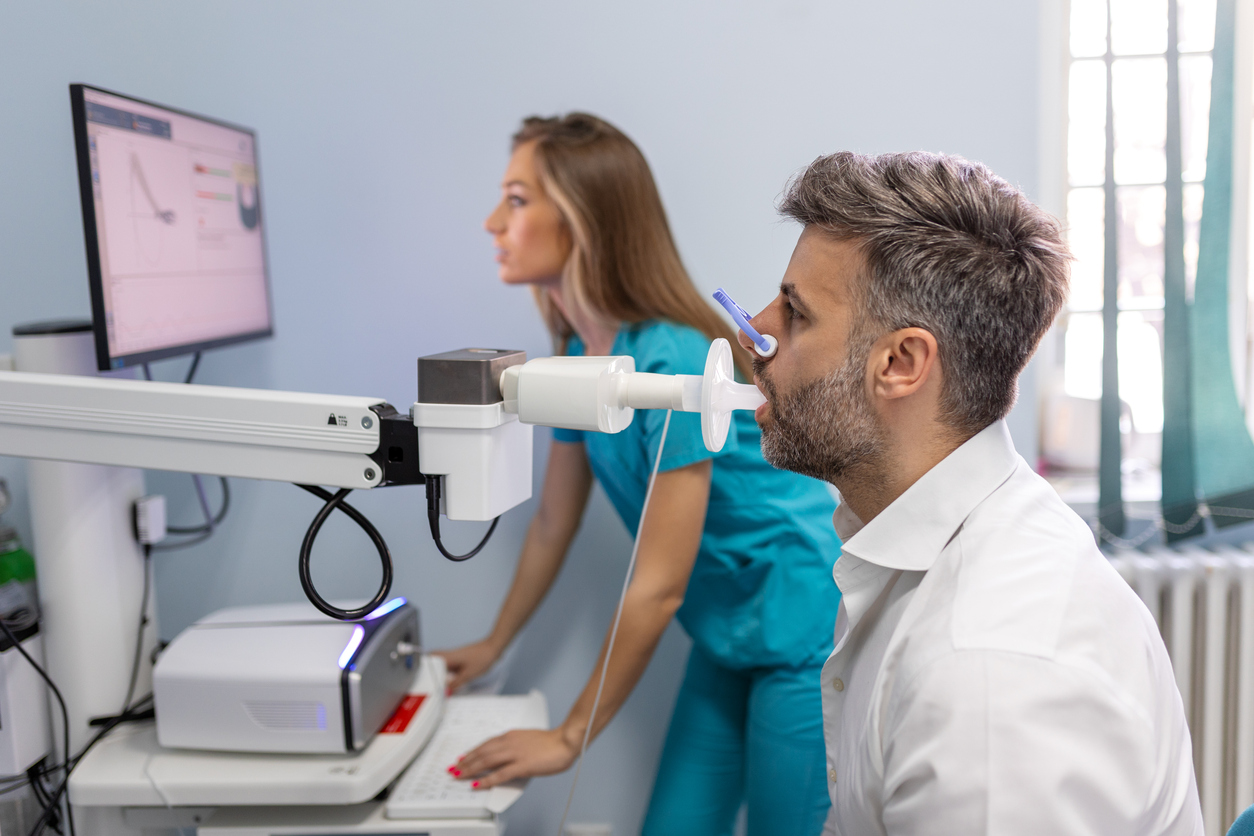
Pulmonary function testing (PFT) includes a comprehensive set of diagnostic procedures used to assess lung function and detect various respiratory conditions. These tests are essential for evaluating patients’ lung capacity, airflow, and gas exchange. They also help healthcare providers diagnose and monitor diseases like asthma, chronic obstructive pulmonary disease (COPD), and interstitial lung disease.
The key components of pulmonary function testing include:
- Spirometry: This test measures airflow and volume as you inhale and exhale to assess your overall lung function.
- Pre- and Post-Bronchodilator Spirometry: This type of spirometry test determines how the lungs respond to medication designed to open the airways. It helps diagnose conditions like asthma or COPD.
- Diffusion: Assesses the lungs’ ability to transfer oxygen from the air into the bloodstream. It can indicate possible issues with gas exchange.
- Lung Volume Testing: Measures the amount of air in the lungs, through either:
- Transthoracic Gas Volume (TGV), a method using body plethysmography (a measurement of lung volume and capacity), or
- N2 Washout, a technique that involves breathing in a specific gas mixture that measures lung volumes based on nitrogen elimination.
Bronchial Provocation Studies
Bronchial Provocation Studies are specialized tests used to assess airway hyper-responsiveness, a key characteristic of conditions like asthma.
During the test, a patient inhales a substance (such as provocholine or cold air) that can trigger airway constriction in sensitive individuals. The response is measured by performing spirometry before and after exposure to the provocation agent. This allows healthcare providers to evaluate how reactive the patient’s airways are.
This test is particularly useful for diagnosing asthma, especially in cases where symptoms are not clearly present or are intermittent. By identifying heightened airway sensitivity, bronchial provocation studies help guide treatment plans and monitor the effectiveness of asthma management strategies.
If you are scheduled for a Bronchial Provocation Study, learn more about the testing here.