Going for the Goal
- 4 minute read.
- Last Updated: 9/21/2023
Stroke patients advance their recovery at CHTC – Harriman
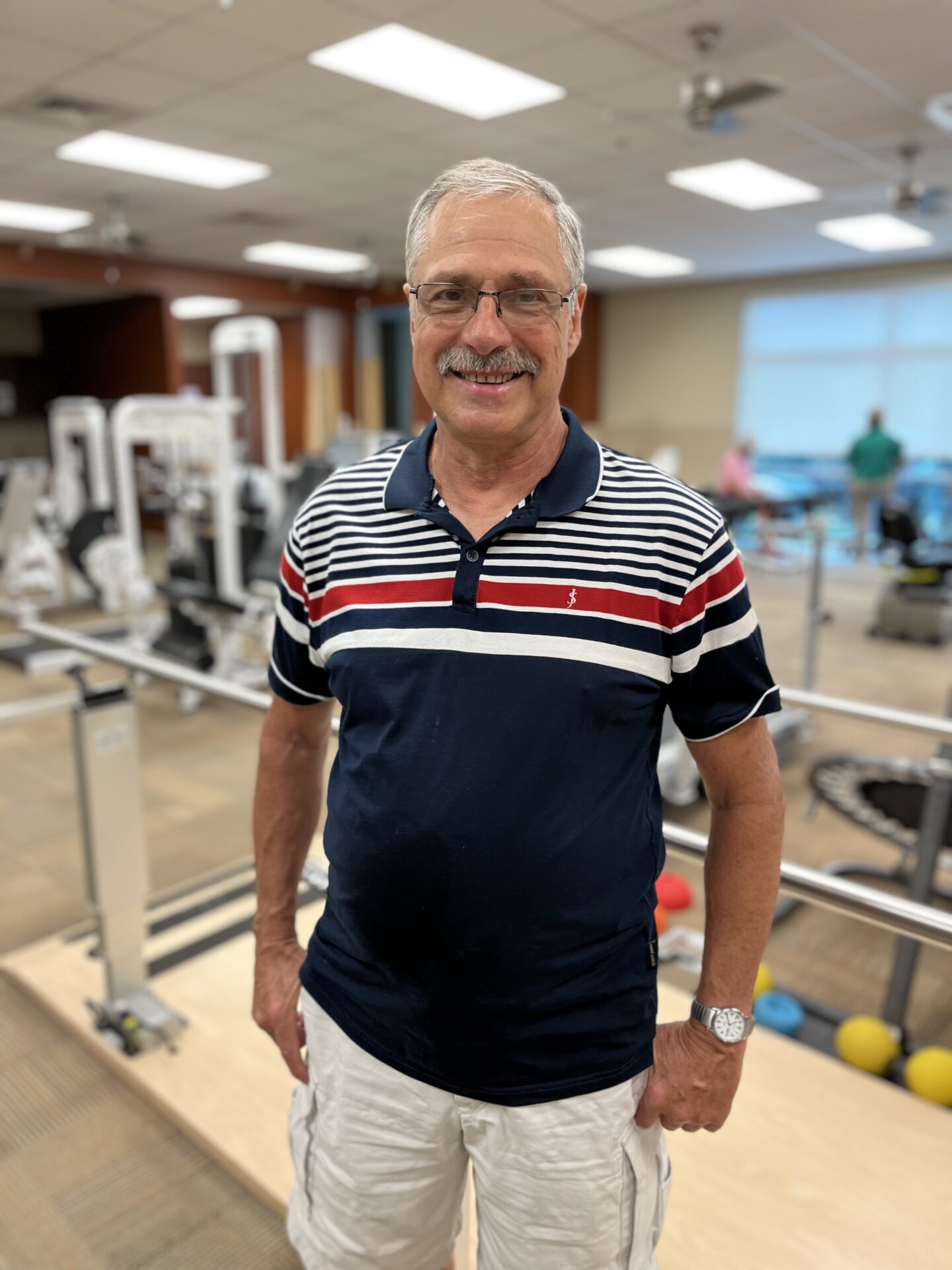
Patients are encouraged to set goals when they arrive for their first appointment at Covenant Health Therapy Center – Harriman. Darrell Whaley remembers well what he wanted to accomplish from Day One.
“When I first started, I just wanted to get rid of that walker,” Darrell says. “By the second week, I had already graduated to the cane.”
Today, Darrell stands tall and walks without assistance. It’s a far cry from where he was at the start of 2023 when he was blindsided by a stroke.
A Balancing Act
There was a time when Darrell could dance on a ladder. When he was young, he rode a unicycle from Wartburg to Harriman. Precarious positions presented challenges he always enjoyed tackling.
The stroke literally threw Darrell off balance, impacting his right side from face to foot. Planting both feet on the ground to walk was now a challenge. Realizing he couldn’t even ride a motorcycle, he began to think about selling the four he owned.
There didn’t seem to be much to do but stay on the couch, that is, until he started physical therapy at Covenant Health Therapy Center – Harriman.
The initial assessment at the therapy center determined that Darrell had lost motor control, he suffered from ataxia (poor muscle control and coordination) and foot drop with decreased proprioception (less awareness of the position and movement of the body).
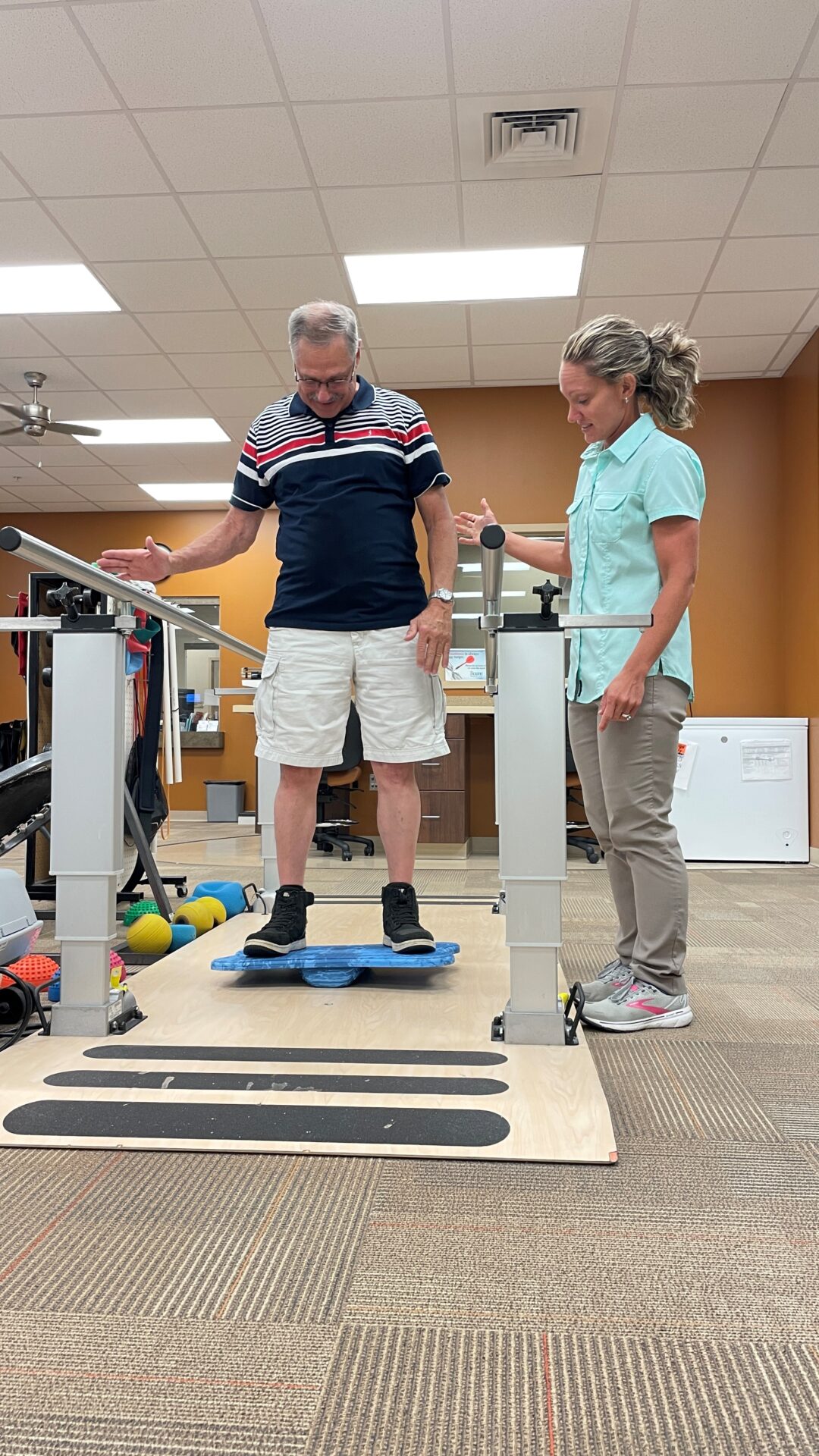
Darrell set his goal to be mobile without leaning on a walker, and he was in the right place to achieve that goal because his physical therapist had set a goal, too.
“My ultimate goal for Darrell was to get him to his previous level of function, which included no limitation with walking and riding his bicycle and motorcycle,” says Katie Radke, a physical therapist at Covenant Health Therapy Center – Harriman. “I needed to improve the strength and motor control of his right leg. I also wanted to improve his balance and stability to prevent his risk of falling.”
A Trifecta of Treatment
A personalized plan was developed to help Darrell regain balance, strength and stamina which included walking and strengthening exercises.
He also progressed through occupational therapy and speech therapy. Radke explains that physical therapy helps with strength of the lower body, balance and walking, while occupational therapy helps with the functional use of the upper body, including arms, hands and fingers.
Speech therapy helps with cognition, swallowing and motor control of the face and speech muscles.
“Physical therapy helped the general strengthening of his legs, balance and safety,” Radke says. “Occupational Therapy helped with the use and control of his right arm, such as brushing his teeth and being able to use a fork to eat. Speech therapy helped Darrell regain clear speech and swallowing capabilities.”
Radke says therapists in the three different disciplines work together as a team, with the patient always at the center of that team. “Darrell’s recovery is the prime example of all three disciplines coming together,” Radke says, “to return him back to his previous level of function using his input and his goals to guide our treatment plans.”
“It’s a must-do.”
While Darrell still lives with some lingering effects of the stroke, it doesn’t keep him down. He’s off the couch and back on a bike.
“If you have a stroke, you definitely need it,” Darrell says. “It’s going to speed things up and get you motivated, and the people are just wonderful. It’s a must-do. No doubt. I probably wouldn’t be the same without it.”
Recovering from disabilities after a stroke is hard work, but Darrell, with the voice of experience, offers encouragement to other stroke survivors.
“Just don’t give up. Giving up’s not going to help,” he says. “As long as there’s room for improvement, it will come, and they’re here to help you.”