
Dry Needling: What You Need to Know
- 4 minute read.
- Last Updated: 2/2/2026
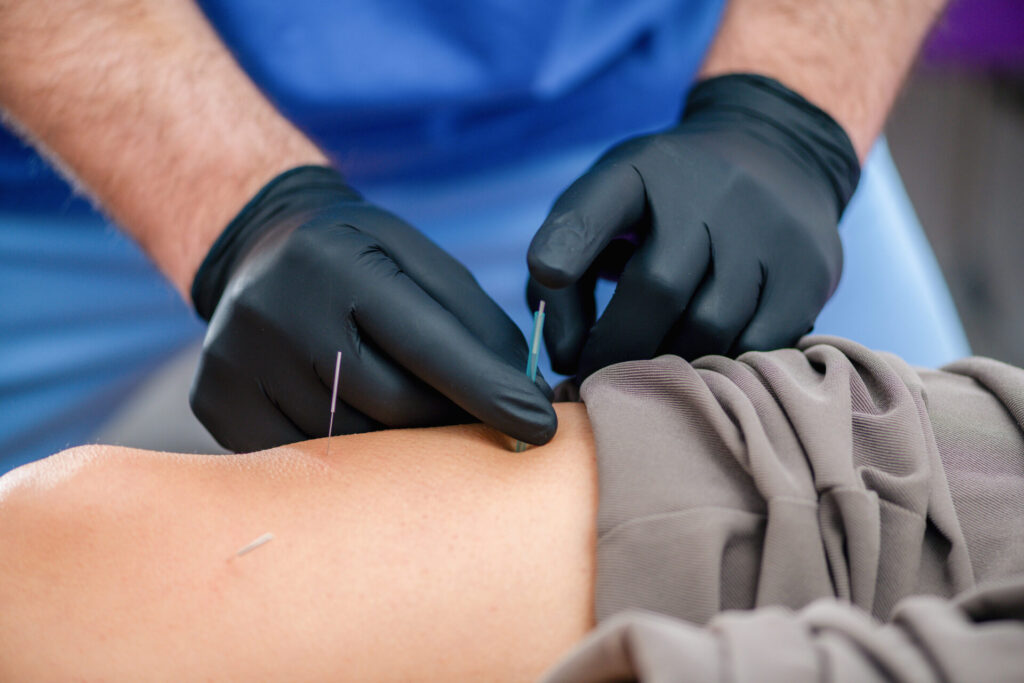
At Covenant Health, we are continually expanding care options to bring innovative therapies to our patients. One new treatment option we are excited to introduce is dry needling. This specialized treatment helps reduce muscle pain, tightness, and movement problems.
What is Dry Needling?
Dry needling is performed by trained healthcare professionals. They place a very thin, flexible needle into tight or irritated muscles (called a trigger point). This helps the muscle relax and promotes healing. The treatment is called “dry” needling because there is no medication injected into the muscle.
Several Covenant Health facilities and therapy centers offer dry needling performed by trained physical therapists. Brad Davis, PT, DPT, OCS, MTC, a physical therapist at Covenant Health Claiborne in Tazewell, explains, “Dry needling is a therapy that can help many types of injuries, from sports injuries to recovery from joint replacements to chronic back pain. Combined with other types of physical therapy, dry needling is an effective way to treat many muscular or movement issues.”
How Does Dry Needling Help?
Dry needling is performed on any skeletal muscle including shoulders, neck, or back muscles. The needles are injected into the muscle, increasing blood flow. This increased blood flow supports healing and speeds up recovery.
Dry needling is not typically used as a stand-alone treatment. It is used in connection with other treatment techniques such as strengthening, stretching, and massage.
What Conditions Can It Help?
Dry needling is often effective for adults and teens suffering from joint injuries or after surgery. The most common reasons for dry needling include:
- Neck and shoulder tightness
- Low back pain
- Headaches
- Hip or glut pain
- Tendon problems
- Sciatica
- Plantar fasciitis
- Muscle pain from posture or overuse
How Many Treatments Do I Need?
Davis notes that the number of dry needling treatments varies from patient to patient. “The patient’s age, general health, and the type of injury all affect the number of treatments needed,” stated Davis. “Some injuries require only 2-3 sessions, while others may need the patient to complete 3-6 sessions.”
Does Dry Needling Hurt?
During dry needling therapy, most people feel a quick poke, a brief twitch, or mild soreness like a deep workout. According to Davis, the amount of discomfort depends on the muscle and the amount of tension. Common mild side effects include temporary soreness, small bruises, or fatigue. Serious effects are rare when trained medical professionals do the procedure.
Who Should Avoid Dry Needling?
Dry needling may not be appropriate for:
- Patients with severe needle phobia
- Individuals with cognitive impairments or communication difficulties
- Young children
- Patients with local skin lesions, lymphedema or compromised immune systems
- Post-mastectomy patients
- Pregnant patients in the first trimester
Patients should always consult their primary care provider if they have concerns about how dry needling may interact with existing medical conditions.
Dry Needling vs. Acupuncture
Dry needling is commonly confused with acupuncture, as both treatments use small needles injected into the body.
| Dry Needling | Acupuncture |
| Targets muscles and nerves based on modern anatomy | Rooted in traditional Chinese medicine |
| Needles inserted deeper into the skin | Needles inserted more shallow into the skin |
| Needles are more flexible, allowing therapist to move needle to release muscle tightness | Needles are inserted into predetermined acupuncture points for about 15-30 minutes |
Get Started at a Covenant Health Therapy Center Near You
Covenant Health offers dry needling as a specialized treatment at several of its outpatient therapy centers across East Tennessee, including locations in Downtown and West Knoxville, Lenoir City, Tazewell, Oak Ridge, and Fairfield Glade. Many insurance plans cover dry needling, and affordable self-pay options are available. Patients can self-refer in some cases, or your primary care provider can refer you to any of our Covenant Health Therapy Centers. Don’t let muscle pain hold you back — discover the healing power of dry needling at Covenant Health.