
Adenomyosis vs. Endometriosis

- 4 minute read.
- Last Updated: 4/27/2026

Pelvic pain and heavy periods are not symptoms anyone should just have to live with. Yet many women experience these symptoms for years without clear answers. Two causes for these symptoms can be adenomyosis and endometriosis.
While both involve tissue that behaves like the lining of the uterus, the conditions develop in different places and affect the body in different ways. Understanding those differences can help patients get the right diagnosis and care.
“Adenomyosis is when the lining of the uterus invades deeper into the muscle of the uterus,” said L. Ellen Moffat, MD, OB‑GYN at Fort Sanders Women’s Specialists. “Endometriosis is different because that tissue is outside of the uterus entirely.”
What Adenomyosis Looks Like
Adenomyosis can make the uterus thicker and more tender. Some people describe a heavy, achy feeling in the pelvis, especially during periods. Others notice:
- Heavy or prolonged menstrual bleeding
- Cramping that feels deeper or more intense
- Pelvic pressure or bloating
- Pain during intercourse
Dr. Moffat shared, “I usually start seeing it in patients in their thirties and forties,” she said. “Ultrasound technology has improved so much that we can sometimes see changes that hint at adenomyosis, which helps us spot adenomyosis earlier than we could in the past.”
What Endometriosis Looks Like
Endometriosis can cause a wide range of symptoms because the tissue grows outside the uterus. These growths can become irritated during the menstrual cycle, leading to:
- Pelvic pain before or during periods
- Pain with bowel movements or urination
- Pain during intercourse
- Difficulty getting pregnant
- Fatigue or digestive discomfort
Symptoms vary widely from person to person. As Dr. Moffat explained, “Everybody is unique. What one woman experiences may not be what another woman feels, even if they have the same condition.”
How the Conditions Differ
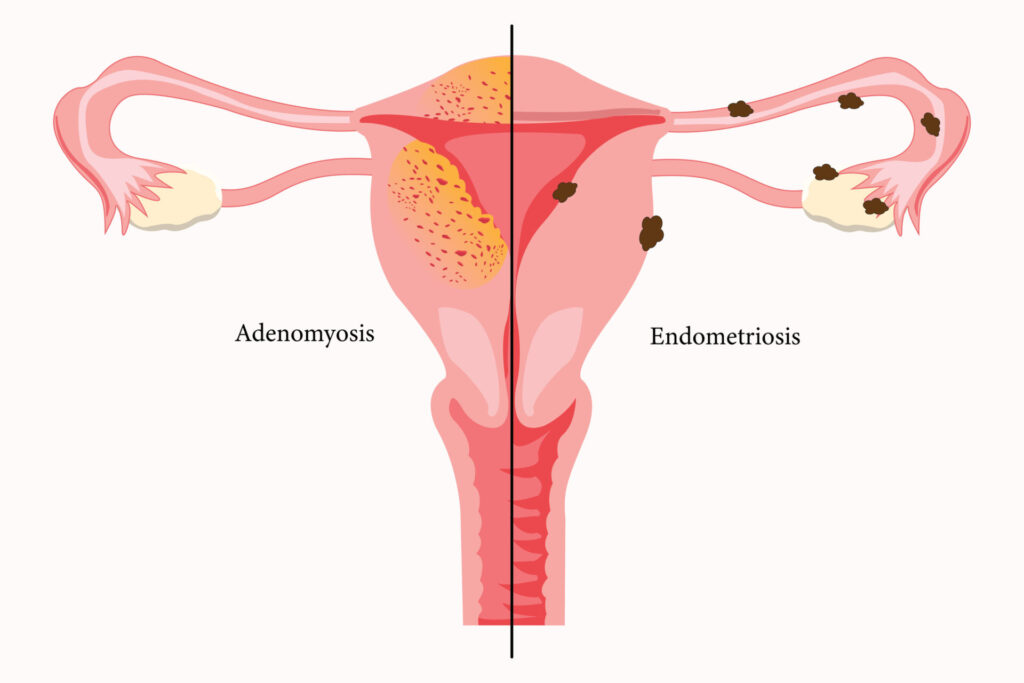
Even though adenomyosis and endometriosis share similarities, there are key differences that help providers determine the right diagnosis and treatment.
| Adenomyosis | Endometriosis | |
| Location | Affects the Uterine Muscle | Affects Areas Outside of the Uterus |
| Uterine Size | Can Cause an Enlarged Uterus | Usually does not affect the Uterus |
| Pain Patterns | Often Feels Heavy or Pressure-like | Often Feels Sharp, Burning or Cyclical |
| Diagnosis | Can be Identified Through Imaging | Often Requires a Minimally Invasive Procedure |
Understanding these differences helps patients know what to expect and what questions to ask during appointments.
How These Conditions Are Diagnosed
Providers use a combination of medical history, physical exams and imaging to evaluate symptoms. Ultrasounds and MRIs can help identify signs of adenomyosis. Endometriosis can sometimes be seen on imaging, but not always. In some cases, a minimally invasive procedure may be recommended to confirm the diagnosis.
The goal is always to understand the patient’s symptoms, rule out other causes and create a plan that supports long‑term well‑being.
Dr. Moffat emphasizes the importance of listening closely to each patient: “I want patients to feel heard. Even if I don’t have the answer right away, I think about our conversation afterward and look for ways to help them.”
Treatment Options
Treatment depends on symptoms, age and future pregnancy goals. Many patients find relief through:
- Medication to manage pain or heavy bleeding
- Hormonal options to regulate cycles
- Minimally invasive procedures
- Surgical options, when needed
Care plans are personalized. “Medicine is an art,” Dr. Moffat said. “You can’t treat everyone the same way. What works for one woman may not work for another. My goal is to tailor care, so each patient feels supported and understood.”
Expert Women’s Care Close to Home
If you’re experiencing pelvic pain, heavy periods or symptoms that disrupt your daily life, Covenant Health is here to help.
Schedule an appointment with our care team at Fort Sanders Women’s Specialists, or find another provider near you to get the answers and support you deserve.
About the Author
Covenant Health
Headquartered in Knoxville, Tennessee, Covenant Health is a not-for-profit, community-owned, healthcare enterprise committed to providing the right care at the right time and place. Covenant Health is the area’s largest employer and has more than 11,000 compassionate caregivers, expert clinicians, and dedicated employees and volunteers.